Cobot
Läpple
Gessmann_Website_Läpple_Logo

LÄPPLE Automotive – Automated Parts Handling with Cobots

How LÄPPLE Automotive Uses Collaborative Robotics to Automate Routine Handling Tasks 

Gessmann_Läpple_Cobot_Project
Gessmann_Website_Läpple_Logo

Automated Parts Handling with a Cobot at LÄPPLE Automotive

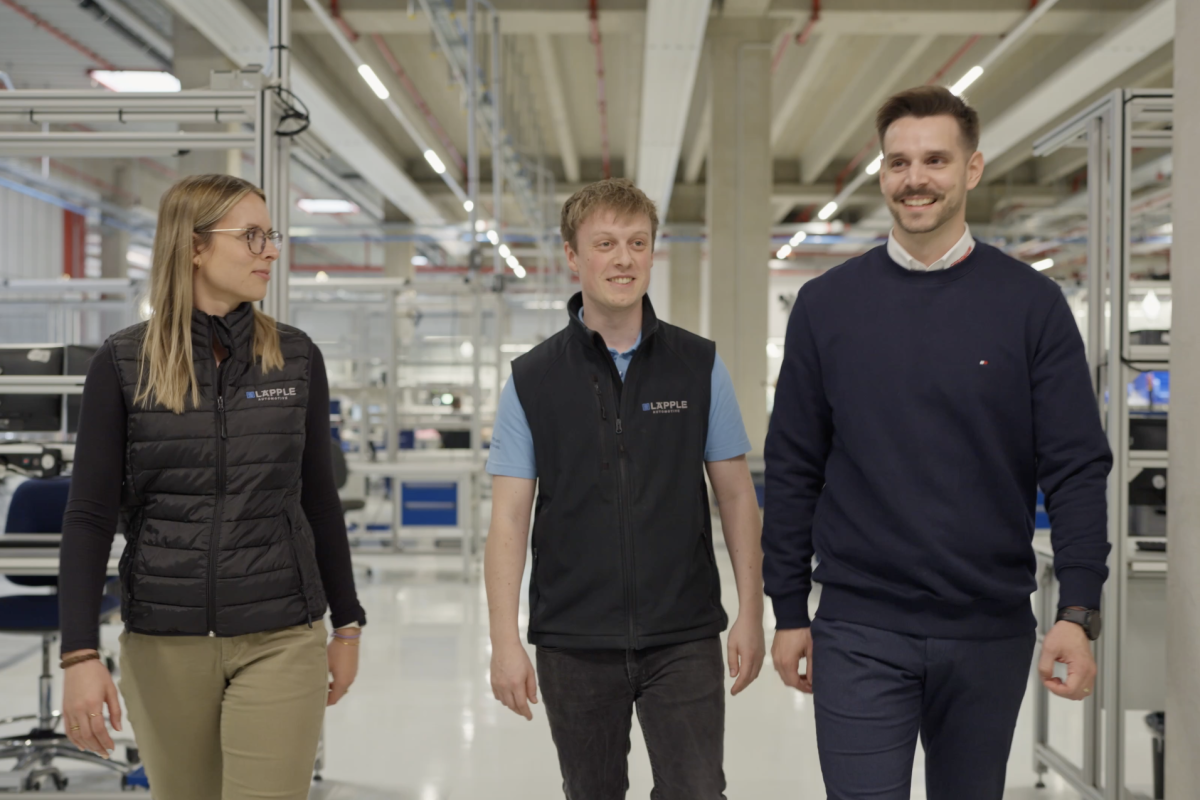
At its Heilbronn facility, LÄPPLE Automotive is partnering with GESSMANN to use collaborative robotics to automate manual steps within existing production processes.

A cobot handles components and automatically places them into mesh boxes. This relieves employees of repetitive tasks and efficiently complements existing production processes.

This project demonstrates how companies can get started with cobot automation by defining a specific application, gain practical experience, and use that experience to identify further opportunities for automation.

Initial Situation

Manual handling processes despite a high degree of automation

Although LÄPPLE Automotive already has a high degree of automation at its Heilbronn facility, certain work steps still had to be performed manually.

Especially at the beginning and end of automated production processes, employees had to handle components and place them in mesh bins.

These repetitive tasks consumed personnel resources and could be physically demanding. At the same time, limited space made it difficult to integrate additional automation technology.

Therefore, the company sought a flexible solution that could be integrated into existing production processes and provide a practical introduction to collaborative robotics.

Manual handling tasks within automated production processes

Repetitive and physically demanding tasks

Limited space in the production area

Integration into existing production processes

Lack of practical experience with cobot technology

Identification of Additional Opportunities for Automation

Gessmann_Cobot_Läpple_2
Project Goal

Efficiently Automate Production Processes with Collaborative Robotics

The goal of the joint project was to automate a clearly defined manual handling process using a cobot.

The goal was not simply to automate a single task. Rather, LÄPPLE Automotive wanted to gain practical experience with collaborative robotics and build its own expertise in working with the technology.

Employees should learn to operate and program the cobot independently and, in the future, to use it for other applications.

At the same time, the project was intended to demonstrate how cobots can be effectively integrated into existing production environments and which other processes are suitable for automation.

Cobot automates parts handling in production

Automated Component Placement as an Introduction to Collaborative Robotics

The GESSMANN Solution

Flexible Cobot Integration into Existing Production Processes

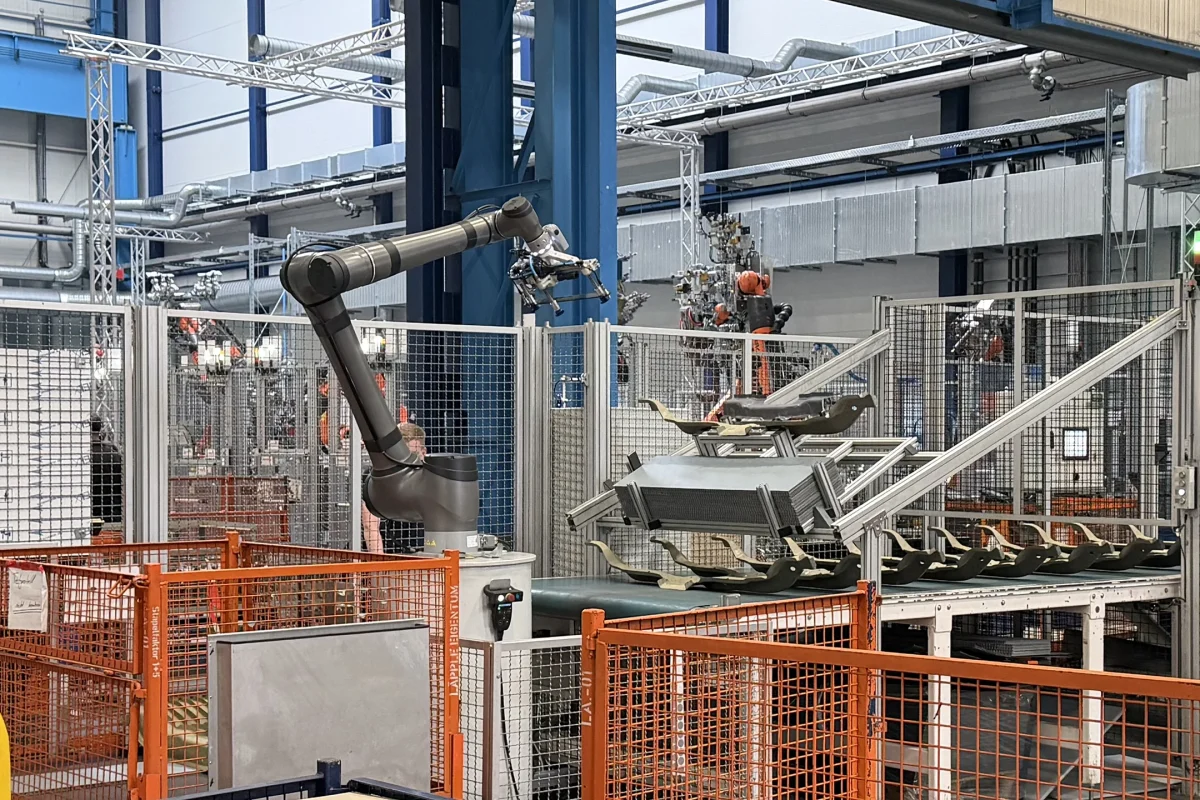
In collaboration with GESSMANN, LÄPPLE Automotive implemented a cobot application for automated parts handling.

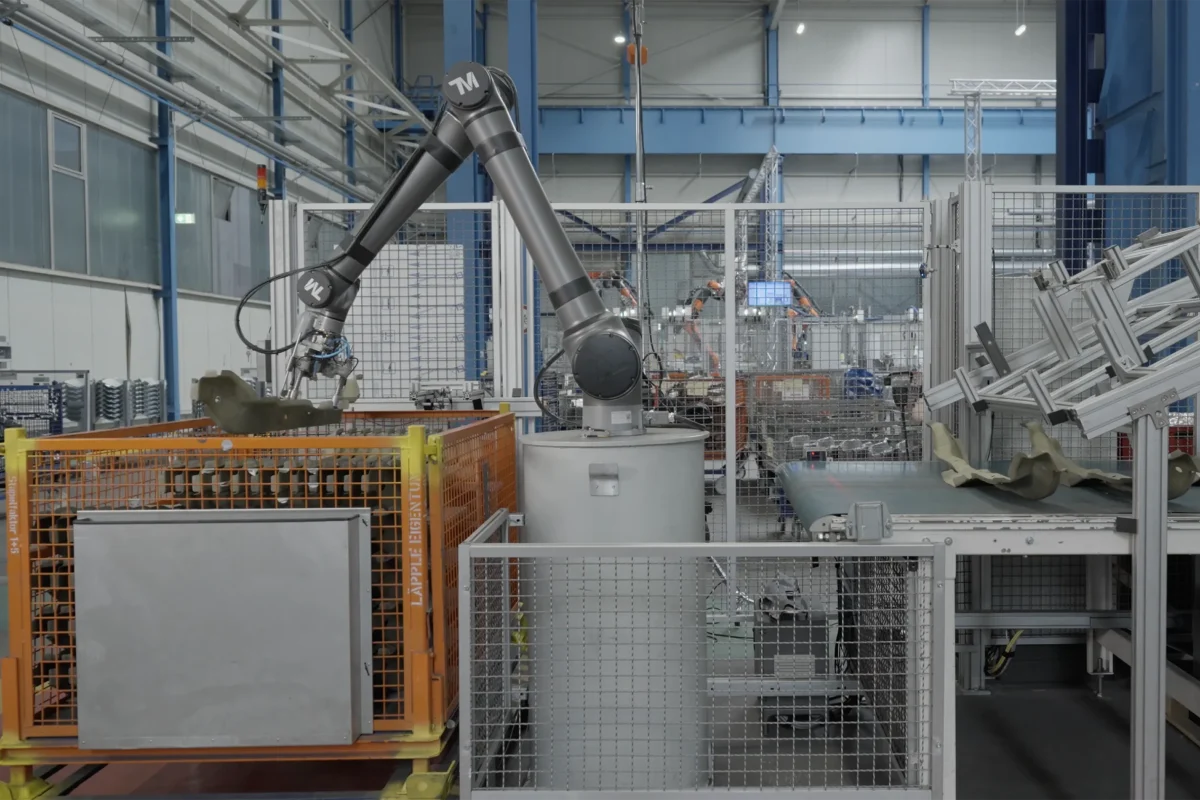
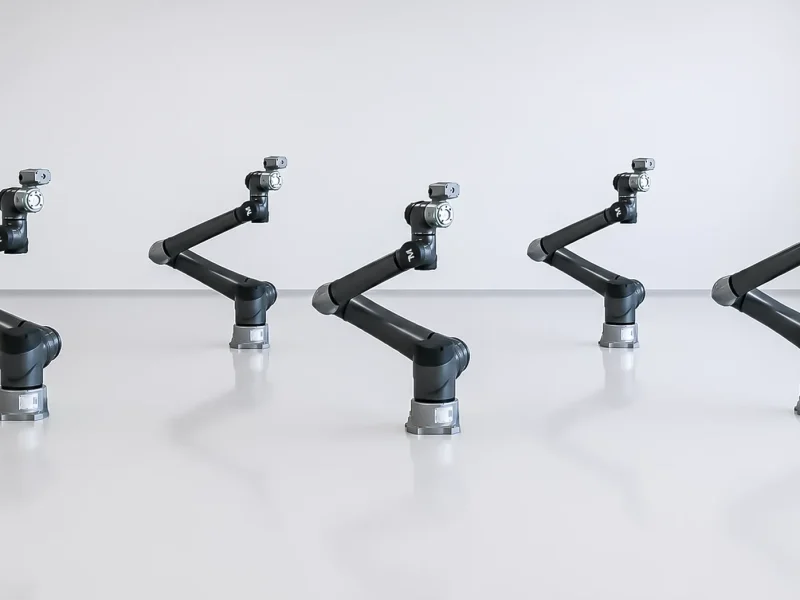
The cobot retrieves components from the existing production process and places them autonomously into a mesh box. This automates a step that was previously performed manually and integrates it directly into the existing production workflow.

The solution handles recurring manual tasks and reduces the workload on employees, particularly when it comes to monotonous and physically demanding activities. At the same time, the flexible use of cobot technology lays the groundwork for further automation applications within production.

Added Value for the Customer

What are the benefits of cobot automation at LÄPPLE?

By using a cobot, LÄPPLE Automotive benefits both from an automated handling application and from building its own expertise in the field of collaborative robotics.

The technology supports existing production processes and makes it possible to identify further opportunities for automation directly within the company.

Automated Parts Handling
The cobot performs repetitive handling tasks and independently places components into mesh boxes. This automates a work step that was previously performed manually.
Ergonomic Relief for Employees
The cobot takes over monotonous and physically demanding tasks, thereby reducing the workload for employees in their day-to-day production activities.
More Efficient Production Processes
Automated parts handling complements existing production processes and ensures that recurring tasks are carried out reliably.
Integration into existing production environments
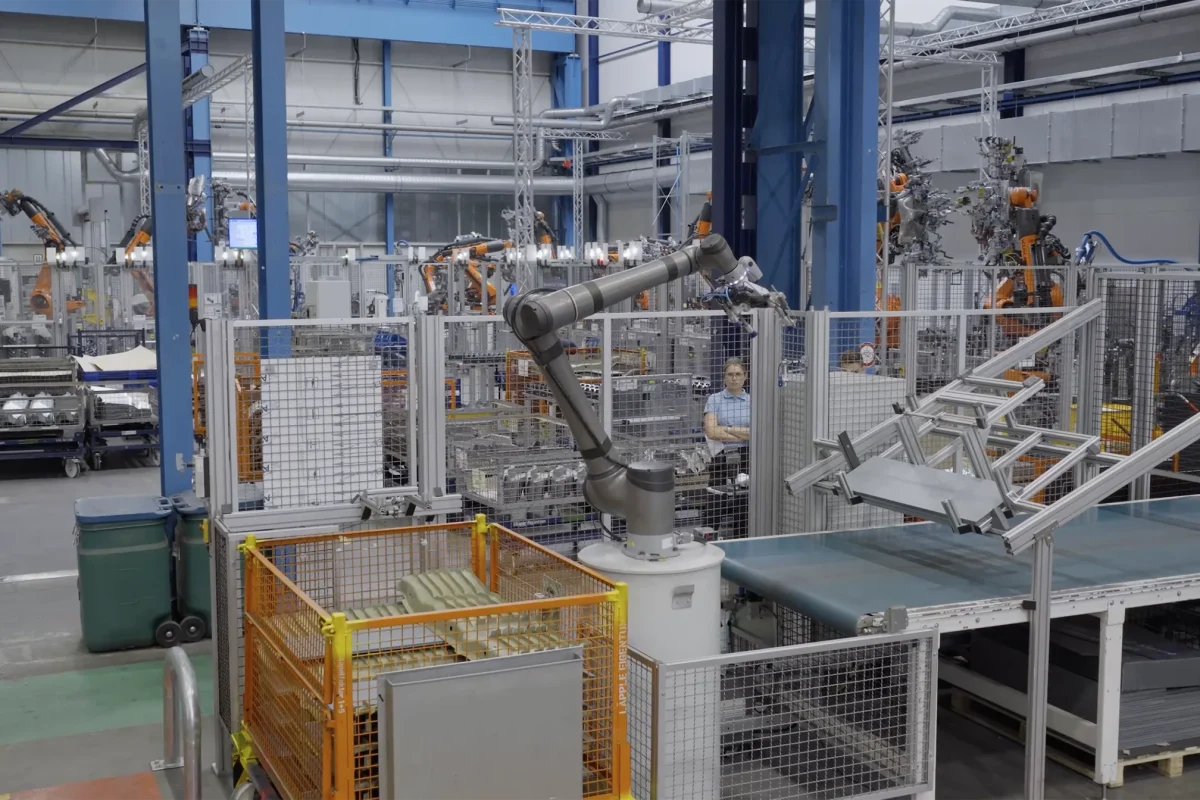
The cobot solution was tailored to the available space and production processes. This made it possible to integrate the automation into the existing process.
Independent Operation and Programming
Through targeted training, LÄPPLE employees can operate and program cobot technology themselves. In this way, the company is building its own automation expertise.
A foundation for future automation projects
The experience gained enables LÄPPLE Automotive to identify additional applications for collaborative robotics and develop new ones.
Project Implementation

From Process Analysis to Automated Cobot Applications

LÄPPLE Automotive deliberately took a step-by-step approach to implementing cobot automation.

In collaboration with GESSMANN, the feasibility of the planned application was first investigated. As part of a proof of concept, the handling process was tested and evaluated.

Based on these findings, a suitable automation concept was developed. GESSMANN provided support, particularly in the selection and integration of cobot and gripping technology.

Knowledge transfer was also a key component of the project. Through training sessions and professional exchanges, employees were empowered to use the technology with increasing independence.

Gessmann_Cobot_Läpple

The Project Process in Five Steps

01

Identify the appropriate handling process

02

Verify Feasibility Through a Proof of Concept

03

Develop a Suitable Automation Solution

04

Train and develop employees

05

Integrating a cobot into the production process

Project outcome

Successful Integration of Cobots into Day-to-Day Production

What began as a deliberately modest automation project at LÄPPLE Automotive has evolved into a practical cobot application.

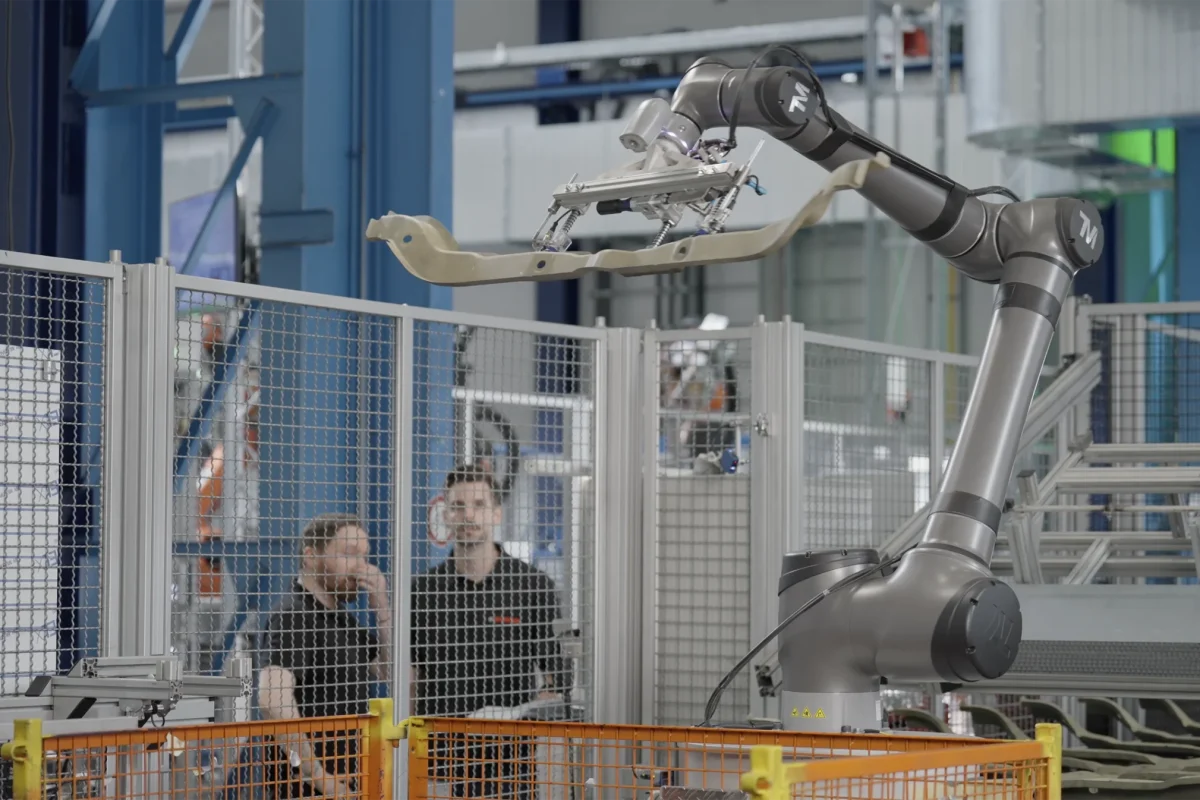
Today, the cobot performs repetitive handling tasks and automatically places components into mesh boxes.

This reduces the workload on employees and efficiently supports existing production processes. Another key factor in the project’s success is the expertise that has been developed. Employees at LÄPPLE can operate and program the cobot technology independently. The experience gained from this first project thus lays the foundation for further automation opportunities within the company.

Gessmann_Cobot_Läpple_4
Gessmann_Cobot_Läpple_1
Conclusion and Outlook

Unlock New Potential in Production with Cobot Automation

The joint project between GESSMANN and LÄPPLE Automotive shows that getting started with cobot automation doesn't have to begin with a highly complex application.

Through the targeted automation of a clearly defined handling process, a practical solution was created that reduces the workload on employees and supports existing production workflows.

At the same time, training and hands-on experience helped build important skills in working with collaborative robotics.

The first project has already sparked further ideas for the use of smart technologies. Among other things, optical quality inspection was identified as a potential next application.

Thus, the first cobot application is not the end, but rather the starting point for further automation steps.

FAQ Section

Frequently Asked Questions About Cobot Automation

Yes. Cobots are flexible:
New grippers, programs, or tasks can be added at any time.
The system can be expanded—for example, with additional workstations or more cobots.


Yes. Cobots can be connected to:

• Machine controls
• Camera systems
• ERP/MES
• Material Handling
This results in end-to-end automation processes.

Through a security concept certified in accordance with ISO standards, which takes into account, among other things:

• Power and speed limits
• Social Distancing Zones
• Sensors
Possible protection zones
The risk assessment determines whether additional protective measures are necessary.

Depending on the complexity:

• Simple applications: 1–2 weeks
• Complex cells: 4–8 weeks
• including custom designs; may be longer as needed

System integration includes:

• Process analysis
• Selecting the Right Cobot Model
• Design of grippers and fixtures
• Safety Concept & CE Compliance
• IT/Interface Integration
• Commissioning & Test Run

Contact our team of experts

Customized solutions for your application—tailored to your needs and delivered with expertise.

Contact Request

We look forward to hearing from you!

Use our contact form, give us a call, or visit us
Meet us in person.

W. Gessmann, LLC

Leingarten Plant:
221 Eppinger Street
74211 Leingarten, Germany

Schwaigern Plant:
17 Siemensstraße
74193 Schwaigern, Germany

You are currently viewing placeholder content from Default. To access the actual content, click the button below. Please note that doing so will result in data being shared with third-party providers.

More Information
Full name
Company name
Email address (business)
Phone number (optional)
Your message
Privacy policy
Position: 0
Slide to 5 to confirm you’re human.