Yes, the service can also inspect, repair, or replace end effectors, vision systems, and add-on modules.

Home » Robotics » Projects & References » GESSbot Wilkinson
How Wilkinson is automating razor blade transport and optimizing material flow in production.
In collaboration with Wilkinson Sword, GESSMANN has implemented an automated transport solution for razor blade production at its Solingen facility.
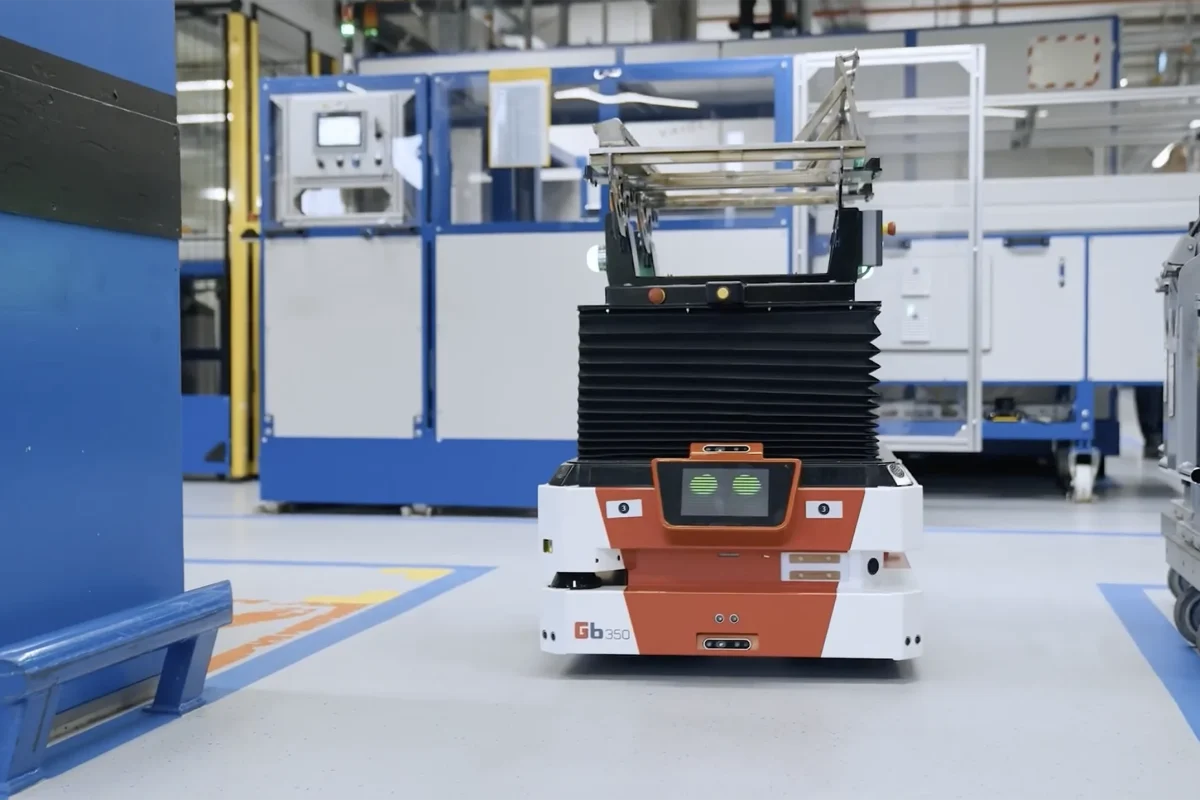
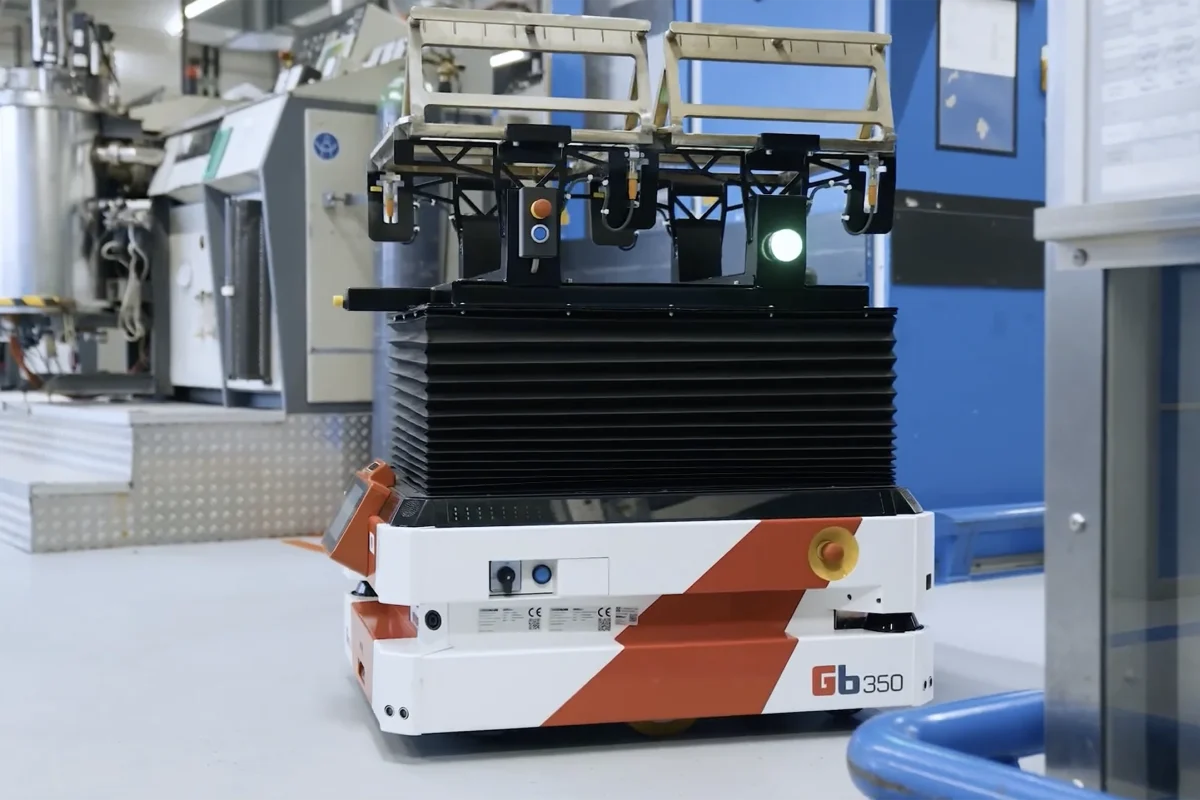
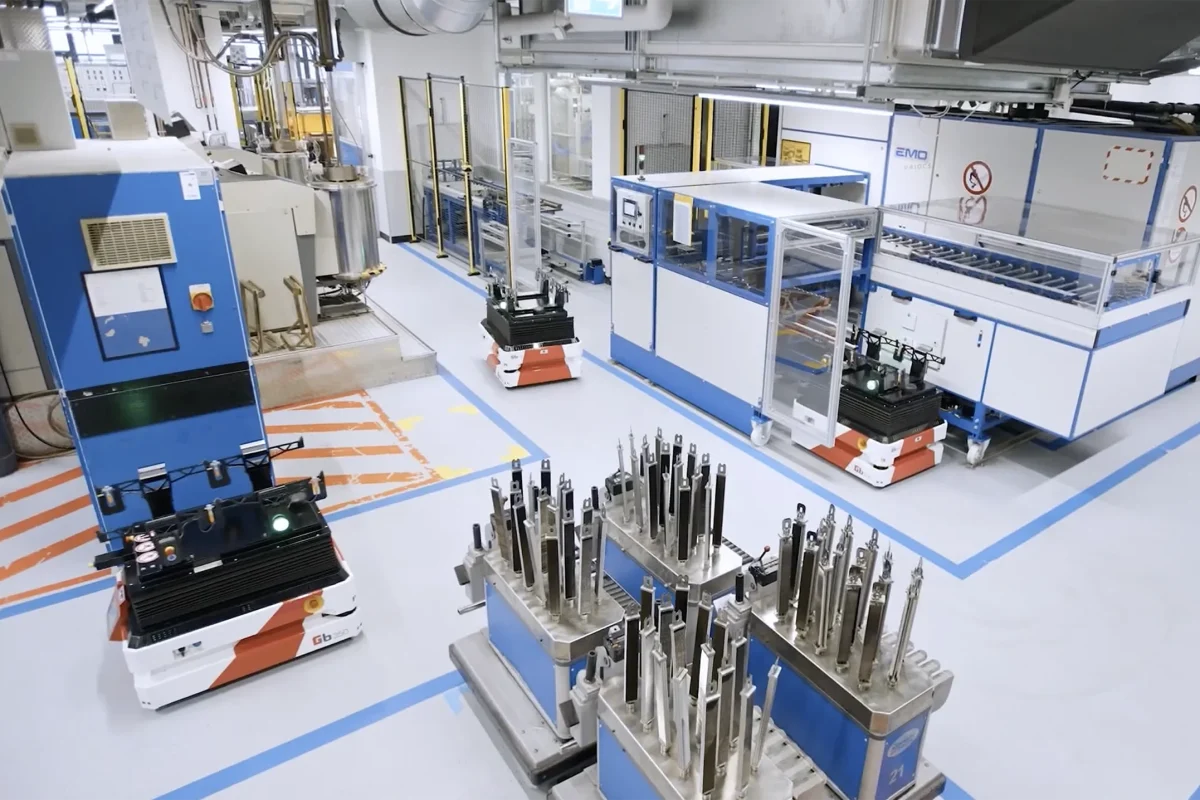
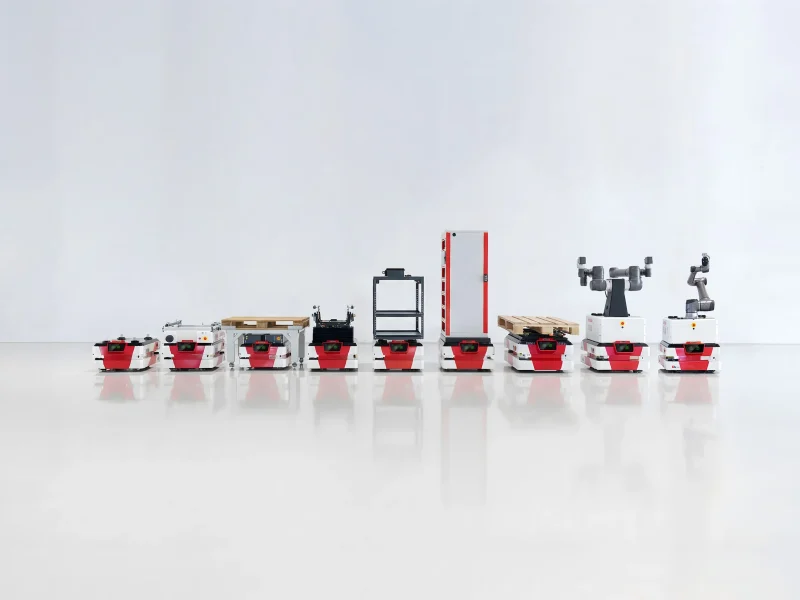
Three GESSbot GB350 autonomous mobile robots handle the in-plant transport of razor blades between various finishing processes.
Through a combination of autonomous mobile robotics, intelligent sensor technology, and automated order triggering, recurring transport tasks are handled, thereby reducing the workload on employees.
The project demonstrates how existing production processes can be efficiently supplemented with flexible automation solutions.
At its Solingen facility, Wilkinson Sword manufactures razor blades that undergo various finishing steps during production. These include, among other things, grinding, cleaning, and coating processes.
Before automation, employees had to manually move the transport carts between the individual machines and load the blades by hand.
These recurring transport and handling steps placed a strain on personnel resources and involved physical exertion.
At the same time, this meant that employees lacked the time for other important tasks, such as quality control.
The goal of the joint project was to automate the transport of materials between the individual finishing processes in razor blade production.
Instead of manual transport carts, autonomous mobile robots should move the workpiece carriers independently between production lines.
The focus was on reducing ergonomic strain on employees, making more efficient use of existing resources, and safely integrating the robots into the existing production environment.
At the same time, the solution should be flexibly scalable so that additional transport tasks and production areas can be automated in the future.
Autonomous mobile robots link the individual production processes
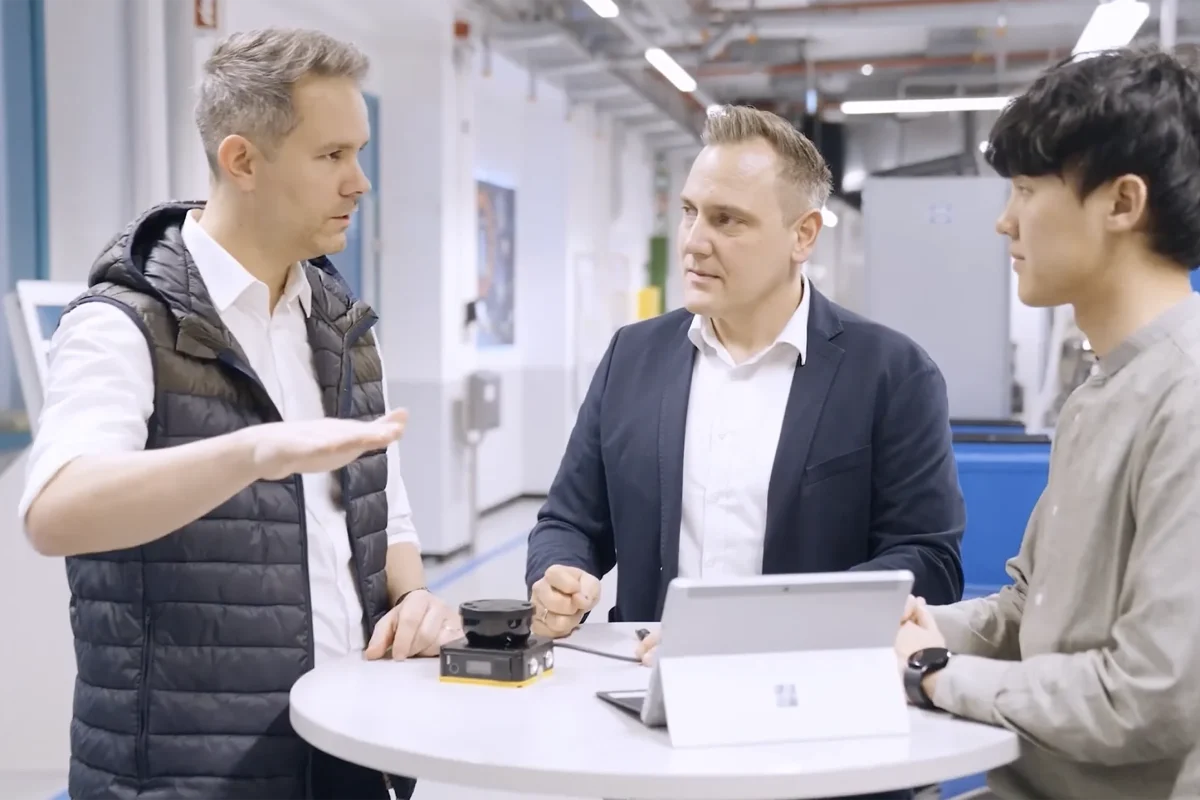
In collaboration with Wilkinson Sword and its sensor technology partner SICK, GESSMANN developed an automated transport solution based on the GESSbot GB350 autonomous mobile robot.
Three GESSbots handle the transport of razor blades between the grinding, cleaning, and coating lines.
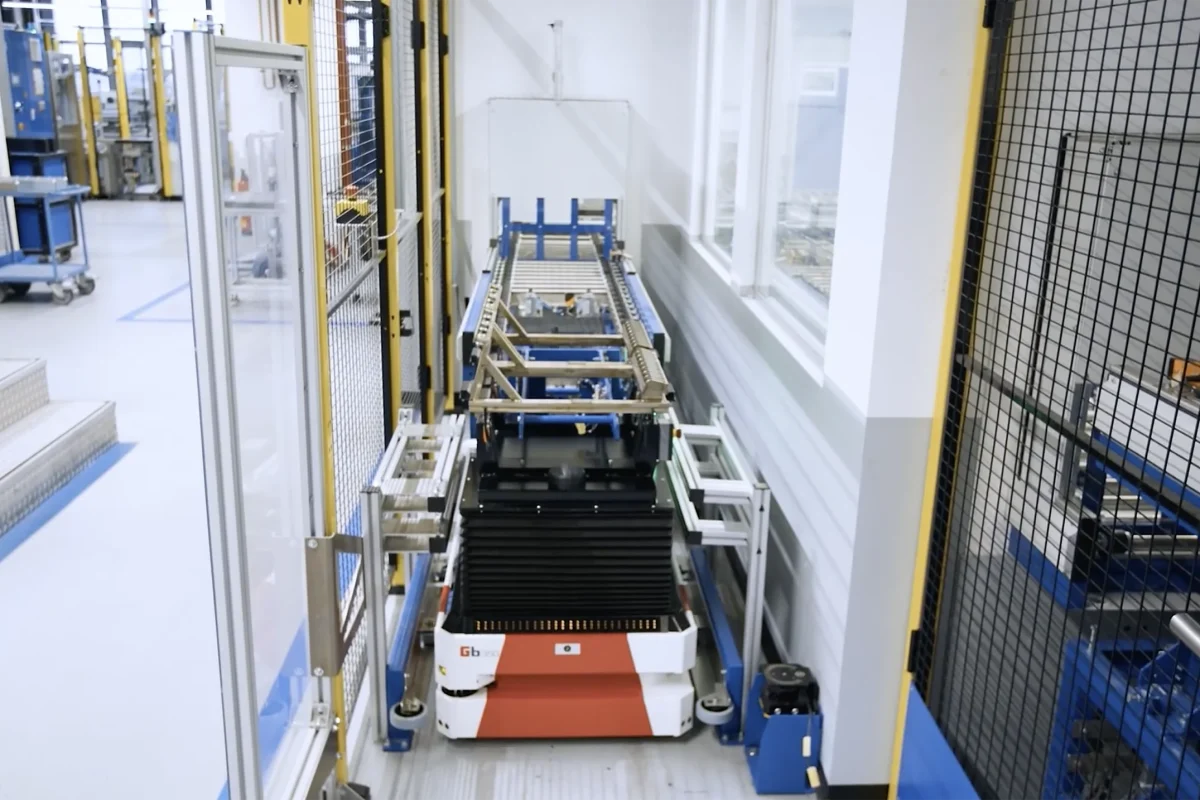
The system includes five passive transfer stations with custom-designed holders for standardized workpiece carriers.
The robots autonomously navigate to the respective stations, dock, and pick up the workpiece carriers for further transport.
By integrating into the existing material flow, tasks that were previously performed manually are now automated, reducing the workload for employees in their day-to-day production activities.
By using the three GESSbots, Wilkinson Sword benefits from an automated material supply system between the individual finishing processes.
The solution handles recurring transportation tasks, allowing employees to focus more on other activities.
To automate the transport of materials within its facilities, Wilkinson Sword commissioned GESSMANN, a specialist in autonomous mobile robotics.
In collaboration with SICK, a sensor and safety concept was developed that is tailored to the requirements of the existing production environment.
In addition to integrating the three GESSbots, particular emphasis was placed on the automatic detection of workpiece carriers and their safe transfer to the individual stations.
The combination of mobile robotics, sensor technology, and control systems resulted in an automated transport solution for the existing material flow.
Analyze Material Flow
Develop an automation solution
Integrating Sensors and Controls
Implement the Security Plan
Automating Transport Processes
The use of three GESSbot GB350 robots has automated the transport of materials between various finishing processes at Wilkinson Sword.
The mobile robots pick up workpiece carriers at the transfer stations and transport them autonomously to their designated destinations.
By automatically triggering transport orders and integrating a coordinated security concept, a practical solution was developed for the existing production process.
Wilkinson Sword reports a noticeable reduction in the workload on its employees, as well as improved efficiency and resource utilization in the affected material flow area.
At the same time, the application lays the groundwork for further automation of internal transport processes.
The joint project between Wilkinson Sword, GESSMANN, and SICK demonstrates how material handling within a facility can be automated in an existing production environment.
The use of three GESSbots handles recurring transport tasks and relieves employees of physically demanding work.
The combination of autonomous navigation, automatic transport requests, and intelligent safety technology enables an efficient flow of materials between the individual finishing processes.
The lessons learned from the pilot implementation also serve as the foundation for further automation efforts.
Frequently Asked Questions About Cobot Automation
Yes, the service can also inspect, repair, or replace end effectors, vision systems, and add-on modules.

Yes. Key components such as motors, joint assemblies, and safety modules are generally available quickly or can be kept in stock.
The cobot is maintenance-free!
Customer service responds quickly via:
• Remote Diagnosis
• Support Hotline
• On-site technicians
The goal is to resume production as soon as possible.
Through regular maintenance, functional tests, and software updates.
Sensors, joints, and end effectors are inspected to prevent failures.
Customized solutions for your application—tailored to your needs and delivered with expertise.
We look forward to hearing from you!
Use our contact form, give us a call, or visit us
Meet us in person.
W. Gessmann, LLC
Leingarten Plant:
221 Eppinger Street
74211 Leingarten, Germany
You are currently viewing placeholder content from Default. To access the actual content, click the button below. Please note that doing so will result in data being shared with third-party providers.
More Information