Yes. Cobots are flexible:
New grippers, programs, or tasks can be added at any time.
The system can be expanded—for example, with additional workstations or more cobots.

Home » Robotics » Projects & References » GESSbot Sumitomo
How Sumitomo Drive Technologies uses autonomous mobile robotics to move heavy transport carts and ease the workload on employees in day-to-day production.
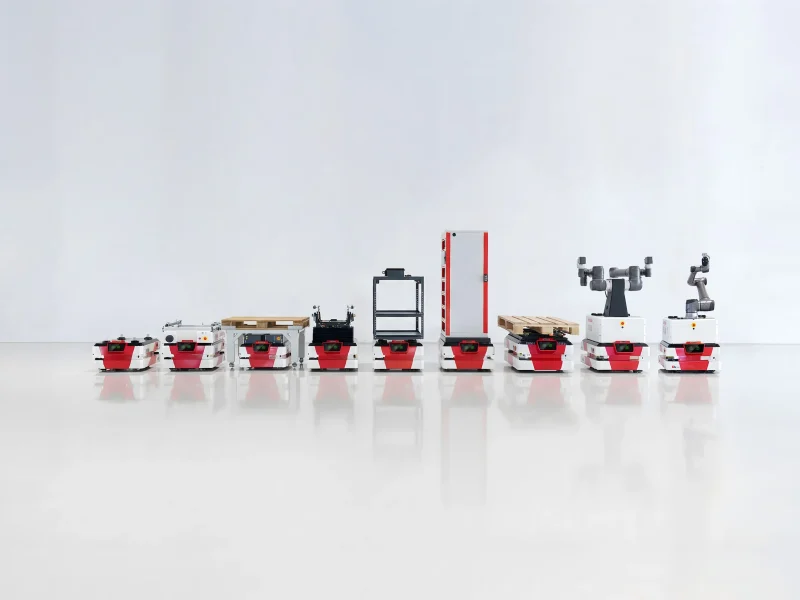
At its Markt Indersdorf facility, Sumitomo Drive Technologies relies on the GESSbot autonomous mobile robot from GESSMANN to automate recurring internal transport tasks.
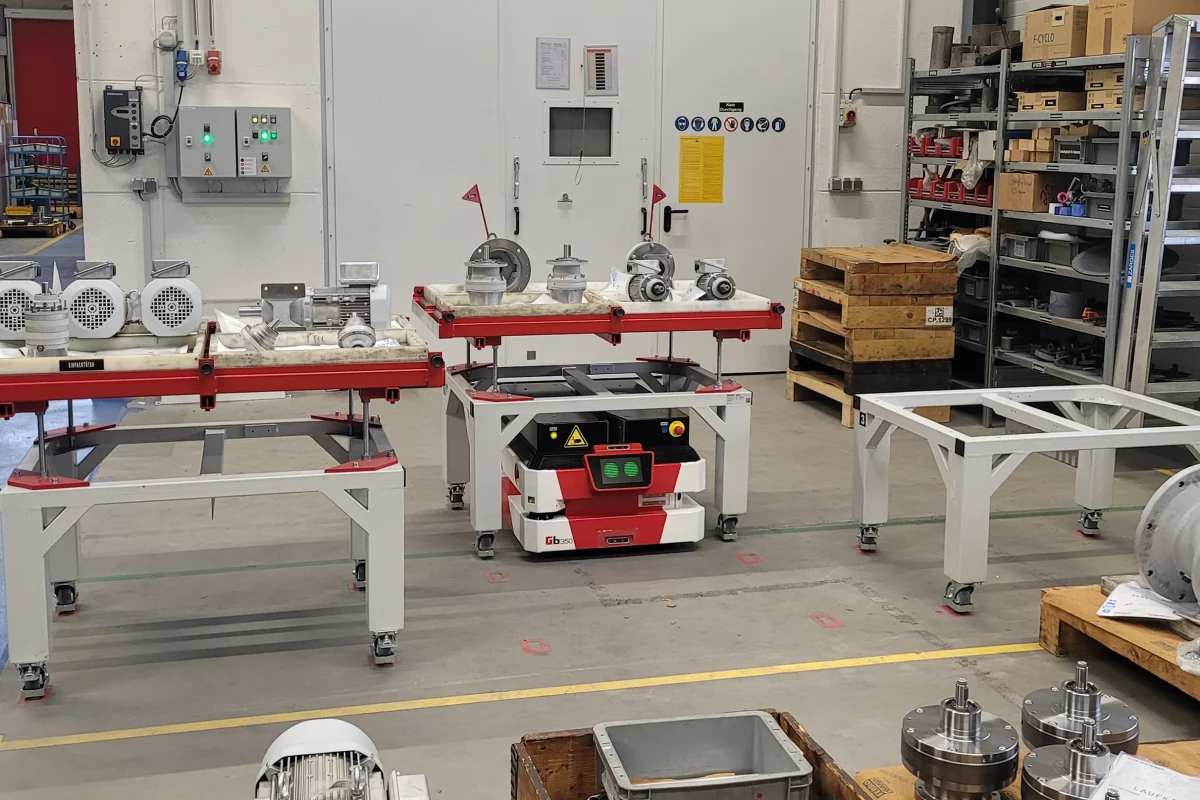
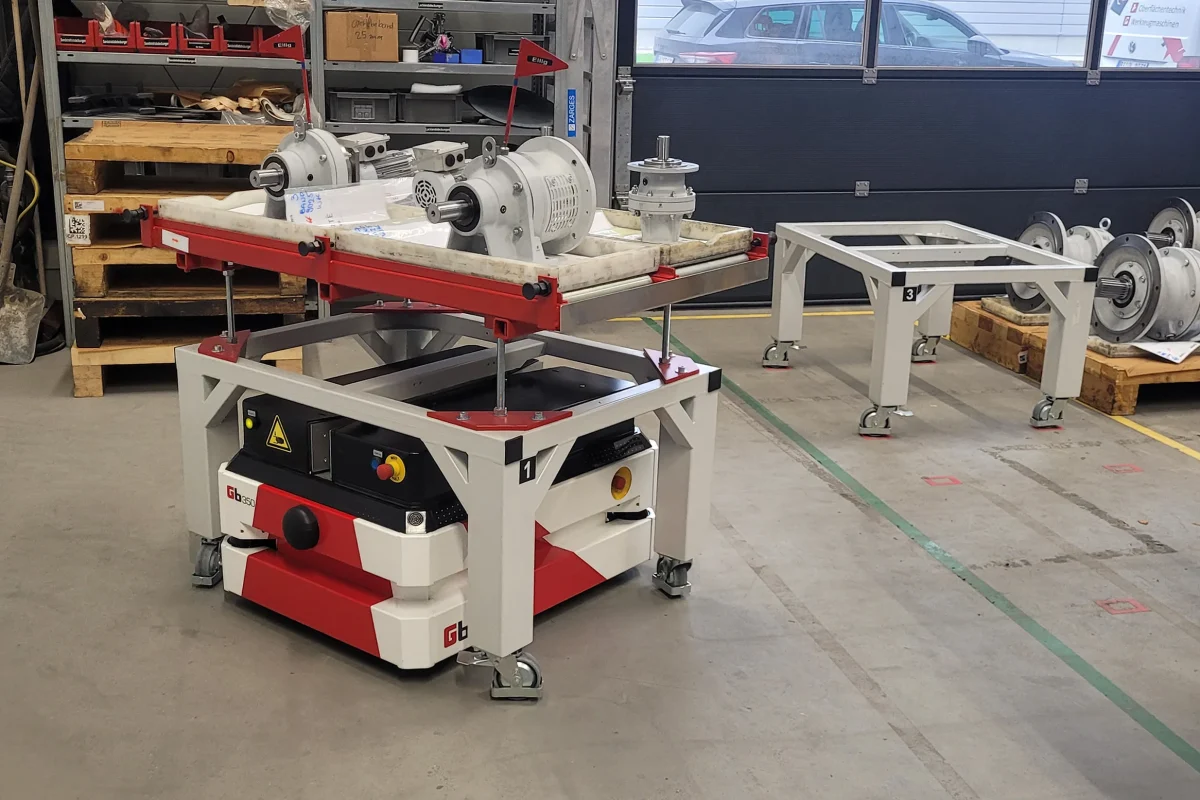
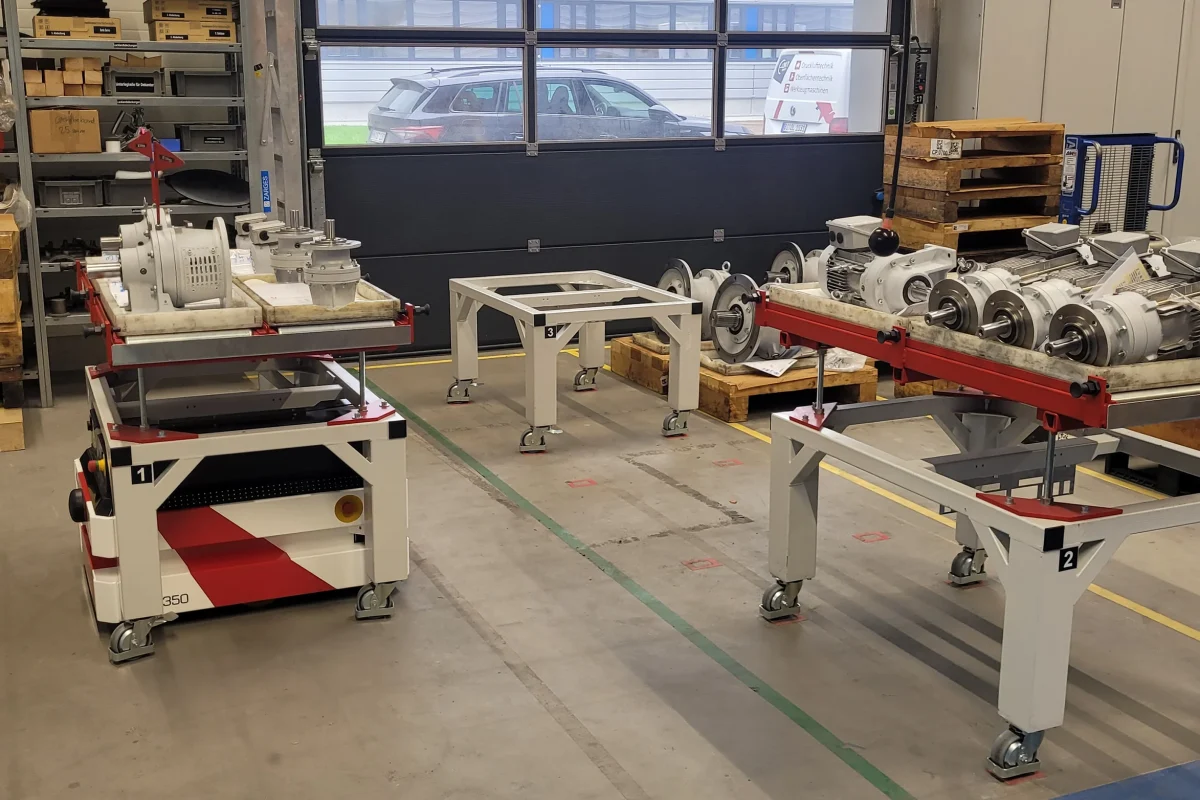
A specially customized GESSbot transport cart handles the transport of heavy material carts within the existing production environment.
The solution can be easily requested with the push of a button and has been specifically tailored to the existing transport routes, cart designs, and operational processes.
The project demonstrates how companies can get started with mobile robotics and gradually automate their material transport—even without complex, fully automated systems.
At Sumitomo Drive Technologies' Markt Indersdorf facility, employees regularly had to move heavy transport carts loaded with products such as motors between different areas.
The frequent and sometimes long transport routes took time and involved physical exertion.
The spatial constraints of the existing plant posed an additional challenge. The development of a suitable automation solution had to take into account the sometimes narrow traffic routes and existing operational processes.
Therefore, the company sought a flexible transportation solution that could be integrated into the existing infrastructure without requiring extensive structural changes.
The goal of the joint project was to simplify recurring transport tasks within the plant and to reduce the physical strain on employees when moving heavy material carts.
The automation solution should be as easy to use as possible and should be able to integrate into existing production and logistics processes.
The focus was on a hands-on introduction to mobile robotics, in which transport tasks can be easily initiated.
A fully automated integrated system or a complex higher-level control system was not required for this.
At the same time, the solution should be flexible enough to accommodate additional transport tasks and automation steps as needed.
A flexible underride platform for the autonomous transport of heavy material carts.
In collaboration with Sumitomo Drive Technologies, GESSMANN developed a transport solution based on the GESSbot autonomous mobile robot.
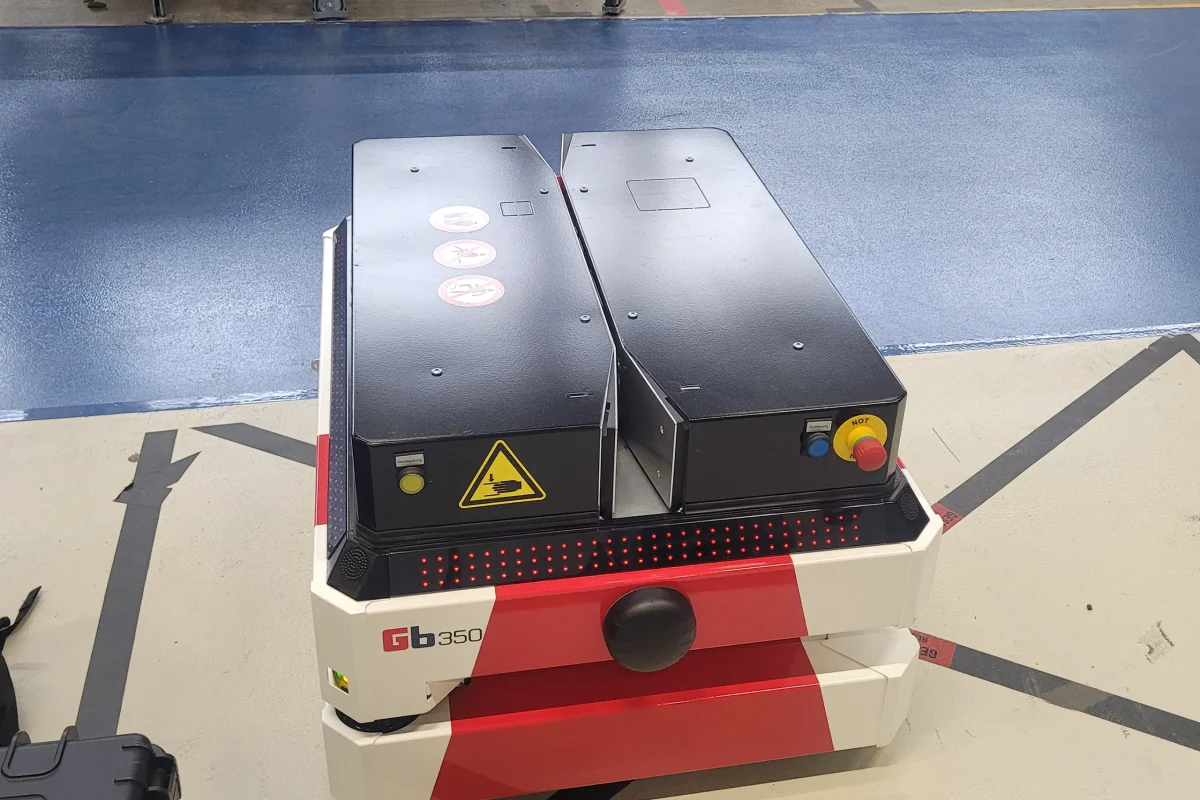
A specially adapted GESSbot under-carriage is used, which can move existing transport carts within the plant.
The mobile platform was designed to be as low as possible to accommodate a variety of customer-specific vehicles and superstructures.
The transport carts were also further developed by the customer and adapted to the requirements of automated material handling.
This resulted in a flexible solution that can be integrated into the existing production environment and assists employees with recurring transport tasks.
By using the GESSbot under-carriage, Sumitomo Drive benefits from a practical automation solution for recurring in-plant transport operations.
The solution handles the movement of heavy material carts and can be easily integrated into existing production processes.
The project at Sumitomo Drive Technologies is one of GESSMANN's early GESSbot applications.
The sometimes narrow passageways in the existing facility, as well as the need to adapt the mobile platform to the existing transport carts, posed particular challenges.
Together, we developed a solution tailored to operational requirements that automates recurring cart transport.
The technical implementation was optimized several times during the project. In addition to modifying the GESSbot undercarriage, the transport carts on the customer's side were also further developed.
In addition, GESSMANN customized the vehicle and gate control systems to fit the existing operational processes.
Analyze Transportation Processes
Adjust the loading ramp
Further Develop Transport Carts
Integrate Control Technology
Optimize the Solution in Production
By using the GESSbot under-carriage, Sumitomo Drive Technologies was able to implement a practical solution for the automated transport of heavy material carts.
The autonomous mobile robot can be summoned at the push of a button and handles recurring transport tasks within the existing production environment.
Thanks to the customized vehicle and gate control systems, the solution could be tailored to the plant's spatial and operational requirements.
By the time the project report was published in March 2025, the GESSbot undercarriage had already been in use at Sumitomo Drive for several months.
This application demonstrates how autonomous mobile robotics can be integrated into established production environments without requiring comprehensive full automation.
The joint project between Sumitomo Drive Technologies and GESSMANN demonstrates that the automation of intranational material transport does not necessarily have to start with a complex turnkey system.
By using a custom-designed GESSbot under-carriage, heavy material carts can be moved autonomously, relieving employees of repetitive transport tasks.
The simple one-button request process allows for seamless integration into everyday production operations.
At the same time, the application demonstrates how mobile robotics can be adapted to existing transport routes, vehicle designs, and operational requirements.
The project thus lays the groundwork for the gradual advancement of in-plant transport automation.
Frequently Asked Questions About Cobot Automation
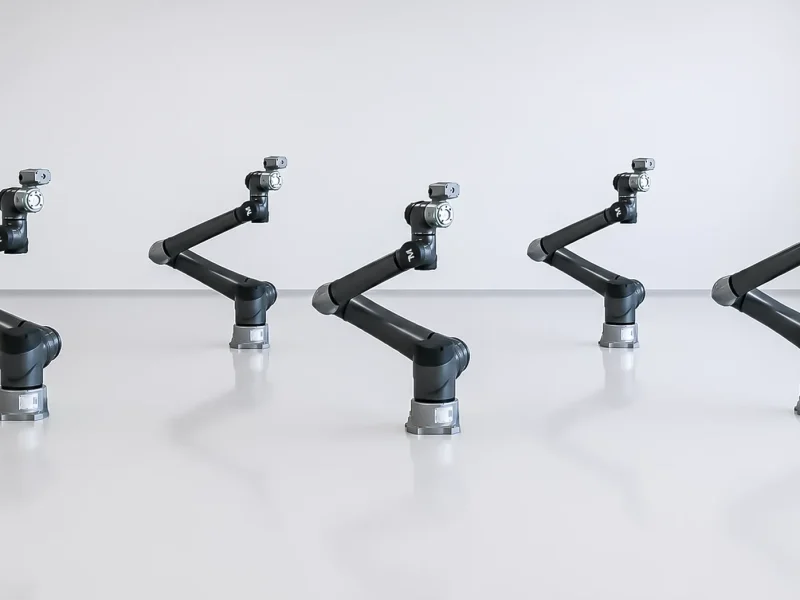
Yes. Cobots are flexible:
New grippers, programs, or tasks can be added at any time.
The system can be expanded—for example, with additional workstations or more cobots.

Yes. Cobots can be connected to:
• Machine controls
• Camera systems
• ERP/MES
• Material Handling
This results in end-to-end automation processes.
Through a security concept certified in accordance with ISO standards, which takes into account, among other things:
• Power and speed limits
• Social Distancing Zones
• Sensors
Possible protection zones
The risk assessment determines whether additional protective measures are necessary.
Depending on the complexity:
• Simple applications: 1–2 weeks
• Complex cells: 4–8 weeks
• including custom designs; may be longer as needed
System integration includes:
• Process analysis
• Selecting the Right Cobot Model
• Design of grippers and fixtures
• Safety Concept & CE Compliance
• IT/Interface Integration
• Commissioning & Test Run
Customized solutions for your application—tailored to your needs and delivered with expertise.
We look forward to hearing from you!
Use our contact form, give us a call, or visit us
Meet us in person.
W. Gessmann, LLC
Leingarten Plant:
221 Eppinger Street
74211 Leingarten, Germany
You are currently viewing placeholder content from Default. To access the actual content, click the button below. Please note that doing so will result in data being shared with third-party providers.
More Information