Production Logistics: Assembly Automation
Expanded with AMR
Schnaithmann Maschinenbau needed a higher degree of
Flexibility in material flow. To achieve this, the company is now using autonomous mobile robots. In combination
Cobots enable the creation of mobile robot stations that do not require a fixed infrastructure.
Industrial production is undergoing a transformation: Instead of high volumes and short cycle times,
Today, flexible production processes are required to accommodate product diversity, frequent model changes, and smaller
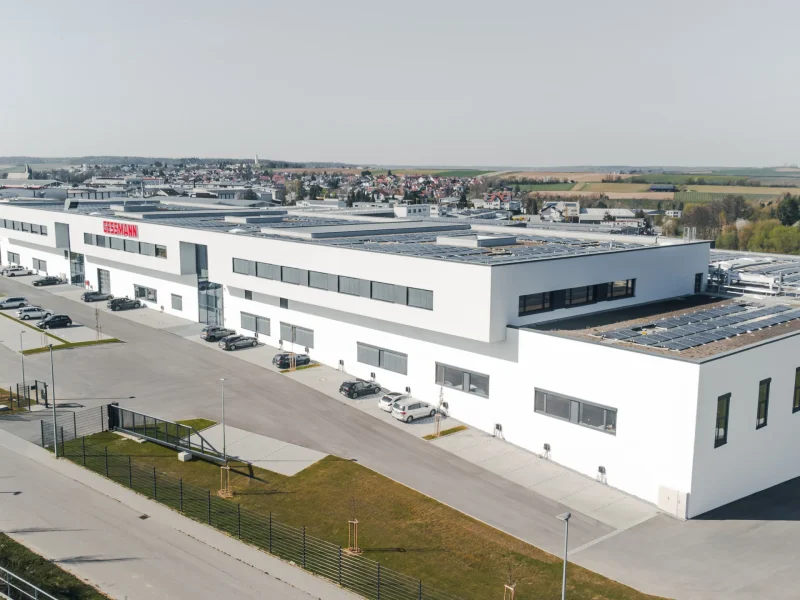
Enable small batch sizes. That is why Schnaithmann has expanded its assembly and transfer systems to include autonomous mobile robots (AMRs) for transporting workpiece carriers, small load carriers, and assemblies. Production Logistics: Assembly Automation Expanded with AMRs Dynamic Production Processes as a Challenge Schnaithmann’s partner for the self-driving transport systems is W. Gessmann, based in Leingarten near Heilbronn, a provider of autonomous mobile robots.
„The goal of our collaboration with Gessmann is to intelligently integrate assembly automation with mobile intralogistics.“,
says Thomas Wahl, who is in charge of technical sales at Schnaithmann in Remshalden and is overseeing the project.
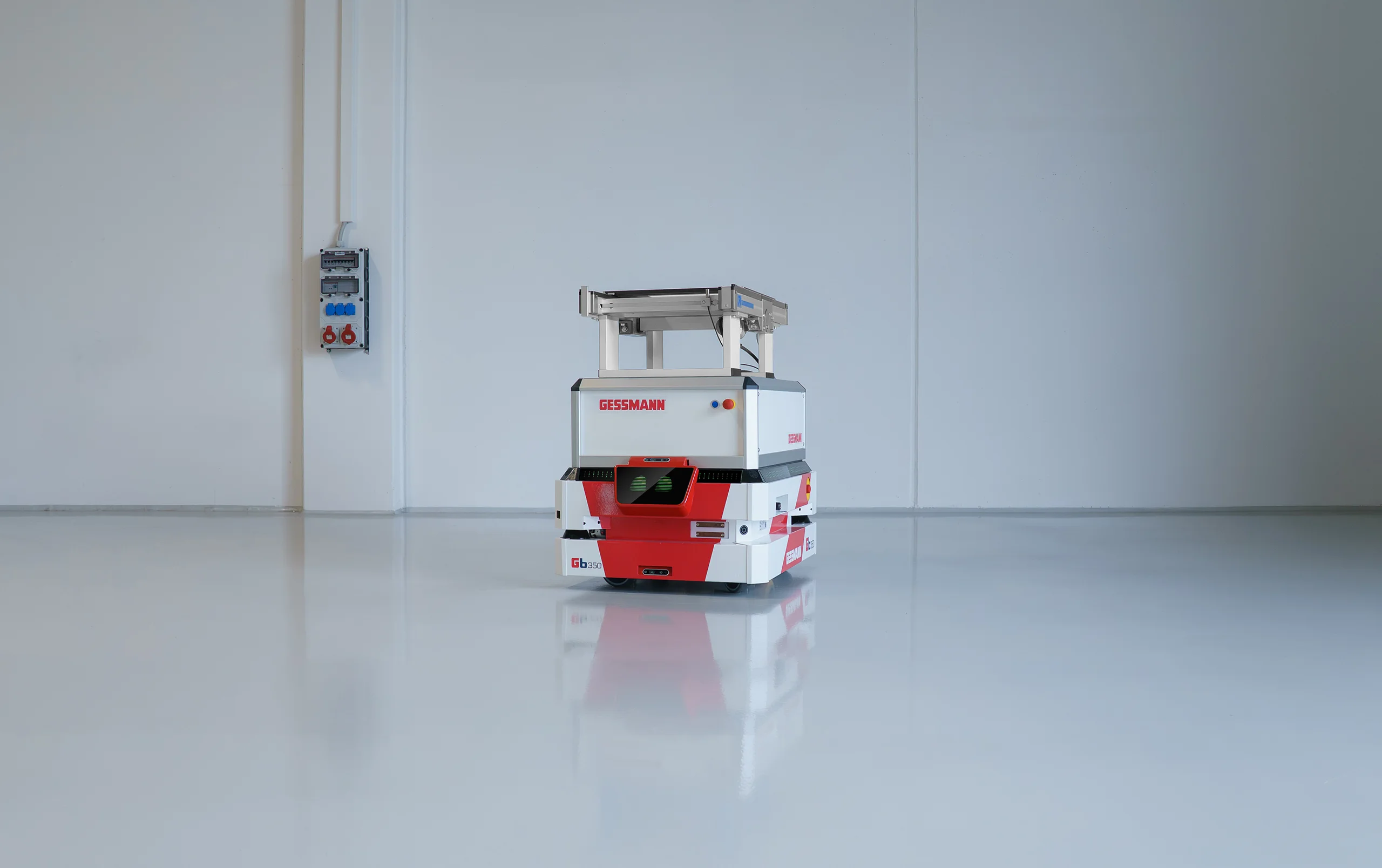
„Autonomous mobile robots like the GESSbot enable dynamic material flows in scalable production concepts.“
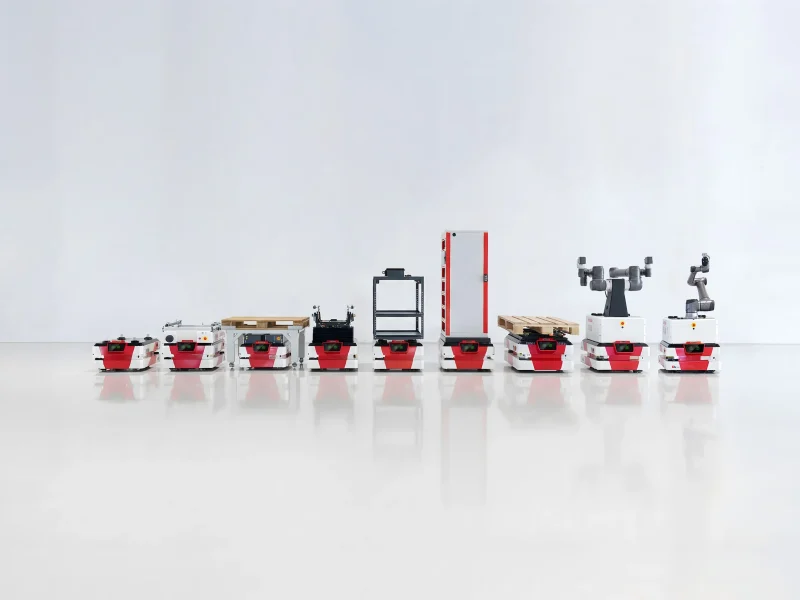
says Steffen Kuhnle, head of the Robotics division at Gessmann. „That’s because production lines today must be able to respond more quickly to new products, fluctuating production volumes, and changing material flows. This is exactly where AMRs demonstrate their economic benefits—especially when used in conjunction with modular assembly systems.“ The autonomous transport vehicles navigate safely and precisely even in narrow aisles less than 1.2 meters wide, making them ideal for compact production line layouts. The complete control system, including safety components, is integrated, so no external control unit is required. To respond to dynamic production processes, the AMRs are equipped with advanced safety technology. 360-degree scanners handle navigation and safety monitoring. For industrial communication, a Wi-Fi-based system with roaming functionality is used, which supports stable connections in large-scale assembly and logistics environments.
The integration of autonomous mobile robots into existing or new Schnaithmann assembly lines offers a high degree of flexibility in material supply and retrieval: GESSbots autonomously transport workpiece carriers, small-load carriers, or complete assemblies between defined transfer points, thereby enabling a decoupled material flow architecture. Typical application scenarios include, for example, supplying buffer areas and shelves, retrieving finished products, dynamically bypassing bottlenecks or malfunctions, docking with conveyor belts or transfer stations, and handling SPC parts for quality assurance. Mechanical, electrical, and safety-related handovers can be reliably implemented through standardized or configurable interfaces. This allows for flexible implementation of future expansions or layout changes to the assembly line.
AMR and Cobots Combined: Mobile Robot Stations for Production and Handling
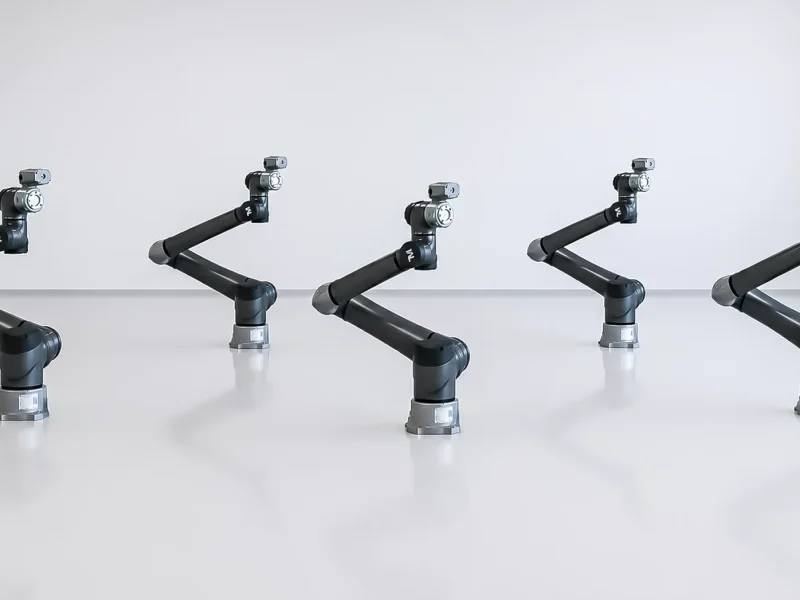
In addition, the combination of AMRs and collaborative robots increases flexibility. Cobots can be integrated into the production line as mobile units for handling and inspection processes directly at the point of use. Typical applications include bin picking, visual quality inspections, and coordinate alignment via landmark detection. When using cobots, Schnaithmann benefits from the close technical collaboration between Gessmann and the cobot manufacturer Techman Robot. Thanks to the fully integrated control architecture, the cobot can utilize the AMR’s safety sensors, dynamically orient itself relative to the vehicle’s position, and autonomously pick up, load, or inspect workpieces. This results in flexible mobile robot stations for production and handling processes that can be deployed directly where they are needed, without requiring rigid infrastructure or costly modifications. „We view autonomous mobile robots as a complement to traditional transfer systems,“ explains Wahl.
„While our transfer systems ensure high reproducibility and stable cycle times, AMRs provide flexibility and adaptive material logistics. Cobots complement the concept with variable automation cells.“ This offers customers both technical and operational advantages: greater adaptability during product and layout changes, shorter integration and commissioning times thanks to standardized interfaces, lower changeover costs for layout modifications, transparent material flows through digital AMR monitoring, and improved scalability through modular expansions such as cobots, scanners, or transfer modules. Overall, these dynamic transport processes can boost the overall efficiency of the production line and improve workplace safety by reducing the need for manual in-plant transport.
Schnaithmann views AMR-based production as a logical next step: „By integrating Gessmann technology, we are specifically expanding our transfer and assembly lines to include flexible intralogistics and robotics systems,“ says Wahl. „This allows us to offer comprehensive solutions for adaptable production environments.“ Kuhnle adds: „The collaboration with Schnaithmann is an excellent fit, both technologically and strategically. Together, we combine modular assembly automation and mobile robotics to create flexible production concepts that are highly adaptable to modern factory layouts. After all, customers aren’t looking for isolated, standalone technologies, but rather end-to-end solutions for flexible production processes.“
 German
  English
  French
  Chinese