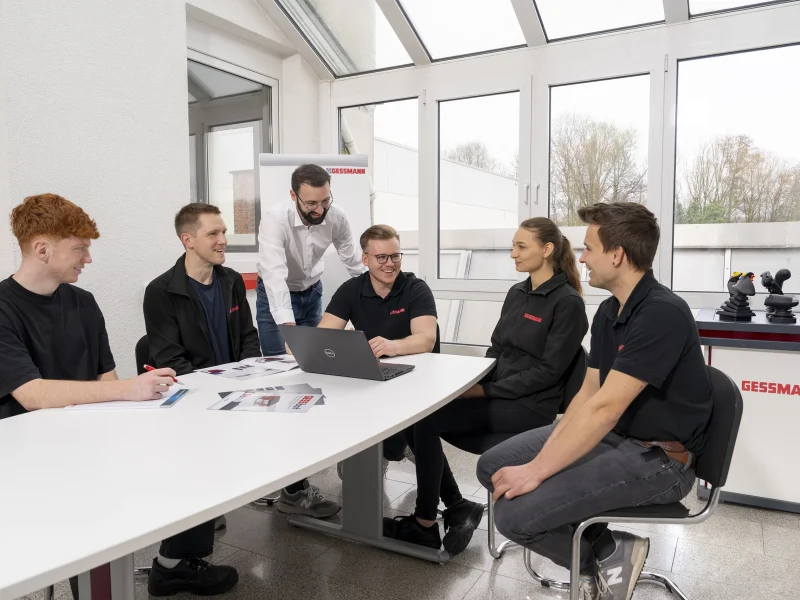
Here you'll find answers to the Frequently Asked Questions About Our Control Systems, HMI Solutions, Robotics, and Automation Technologies
Here you'll find answers to our HMI Solutions, Operating and Control Systems as well as to the Integration of Custom System Solutions – from development to customization for your application.
What certifications do Gessmann products have?
Gessmann holds various certifications, including:
-
ISO 9001
-
ISO/TS 22163
-
Other industrial standards and safety certifications
How ergonomic are the HMI solutions?
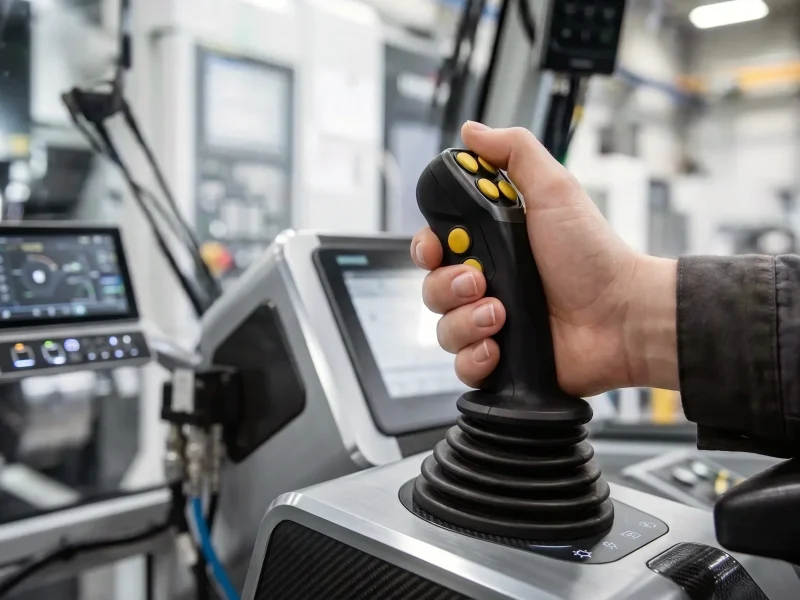
HMI systems serve as the interface between humans and machines and enable intuitive control and real-time monitoring of processes.
Can complete control stations be supplied?
Yes, Gessmann offers complete control stations, control panels, and operator seats, including integrated controls.
Which interfaces are supported?
Typical interfaces include:
-
CAN Bus / CANopen
-
PROFINET / PROFIsafe (depending on the system)
-
analog and digital signals
Are the products suitable for harsh environments?
Yes, many products are designed to meet protection ratings such as IP65 or IP67 and are therefore dust- and water-resistant.
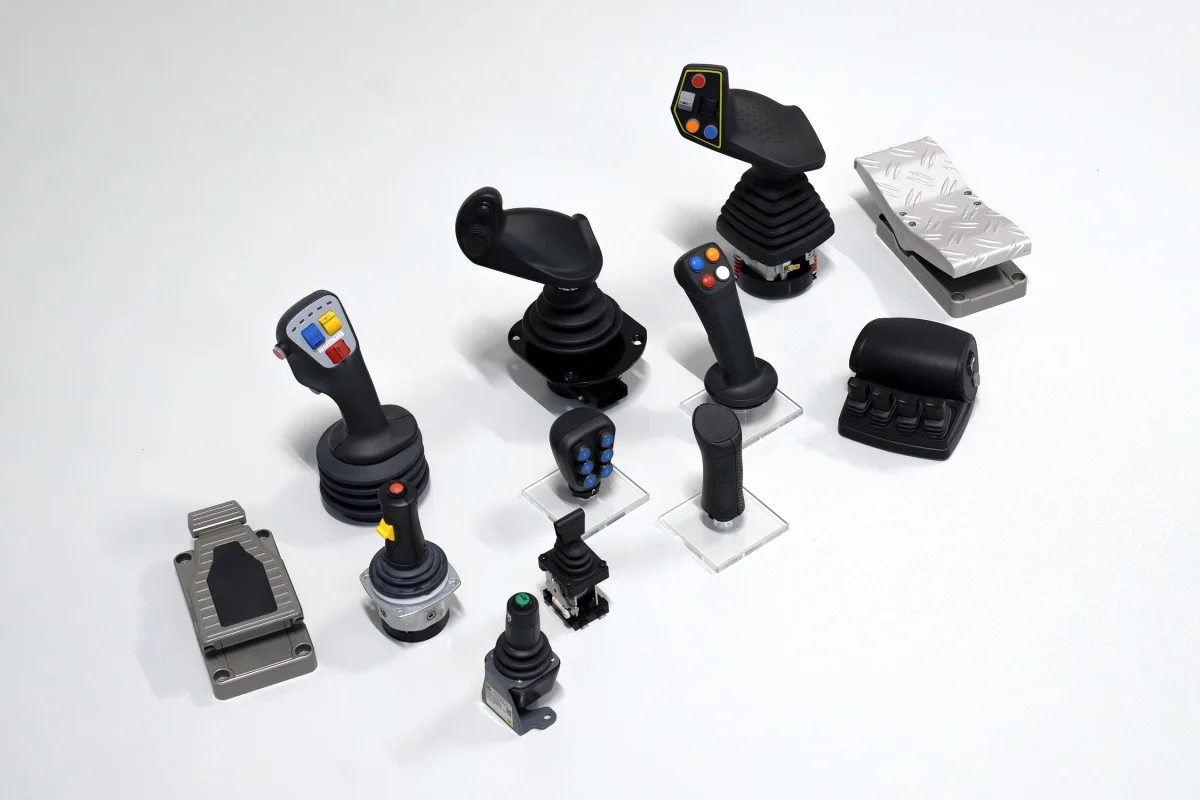
What technologies are used in joysticks?
Gessmann uses, among other things:
-
Hall-effect technology (contactless, low-wear)
-
Potentiometer Technology
-
CAN Bus Interfaces
What are the advantages of Gessmann HMI products?
Typical benefits include:
-
High durability for industrial environments
-
Precise Control
-
Ergonomic Design
-
Long service life
-
"Made in Germany" Quality
Are Gessmann HMI systems customizable?
Yes, in addition to standard solutions, Gessmann also offers custom-designed solutions that are precisely tailored to specific machines and applications.
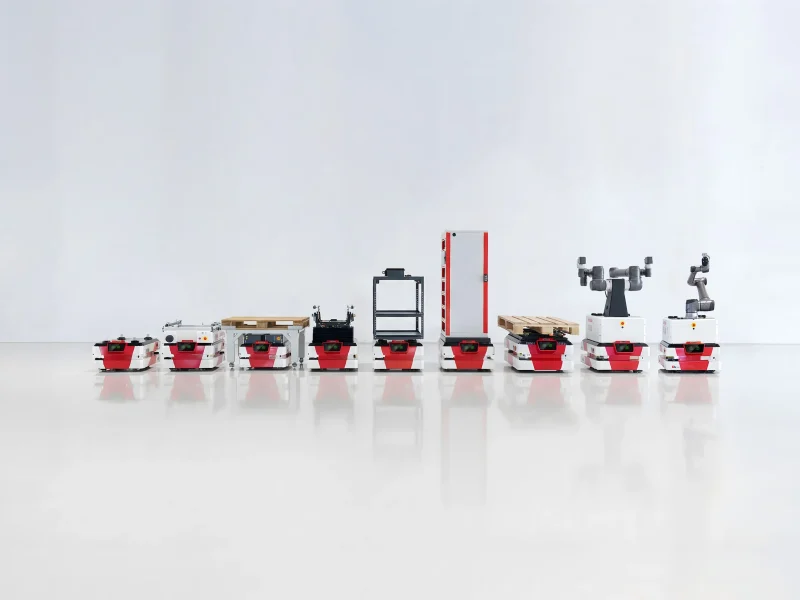
Learn more about our AMR Systems (Autonomous Mobile Robots), whose Integration into Production Processes, safety features, and the Service Support for mobile robotics solutions from Gessmann.
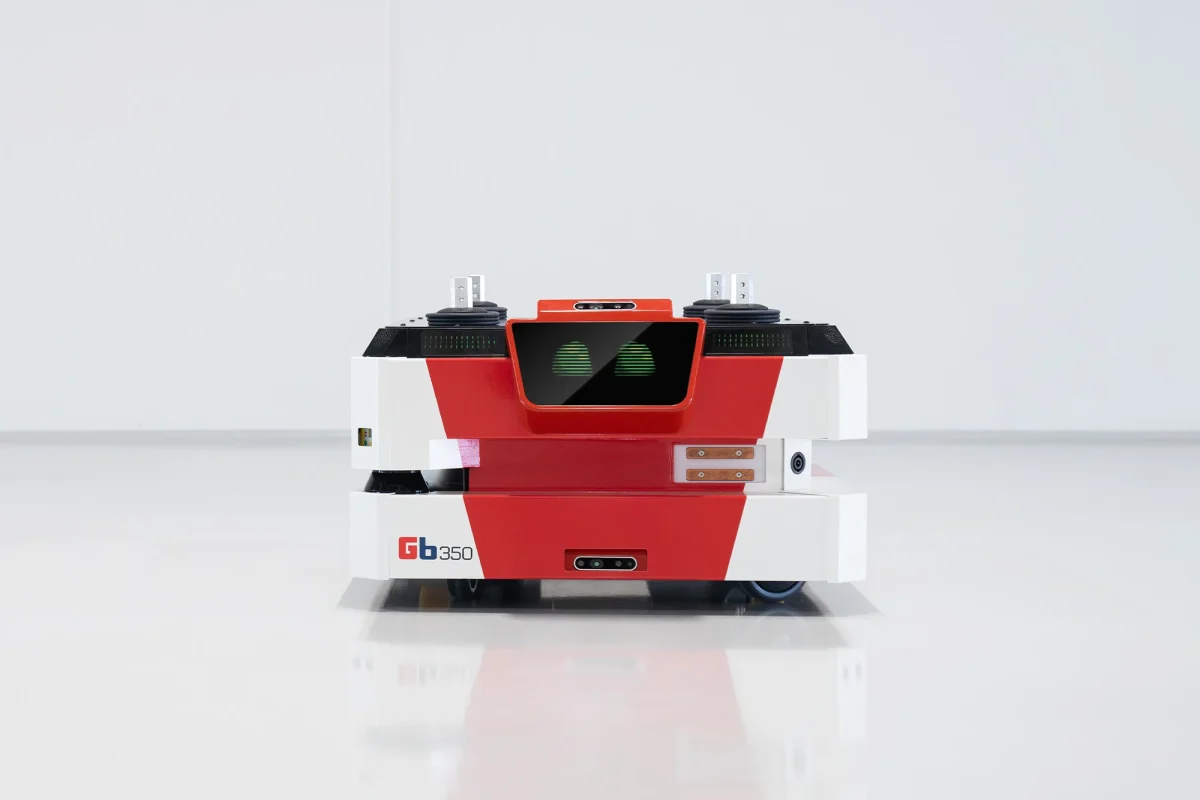
Is the system scalable for future growth?
Yes. Additional AMRs can be easily added.
Multiple production halls, new product lines, or additional interfaces can also be easily integrated.
This makes the system a sound long-term investment.
What happens if my processes or layouts change?
AMR systems are highly flexible.
New routes, stations, or workflow adjustments can be implemented via the software at any time—without major changes to the infrastructure.
Can the AMRs be integrated with my existing systems?
Yes.
AMRs can be integrated into virtually all modern systems, such as:
• WMS / Warehouse Management
• MES / Production Control
• ERP (e.g., SAP)
• Conveyor systems, machinery, transfer stations
The integration enables automated transportation processes.
How long does it take to implement an AMR system?
Typically:
• Small facilities: 1–3 weeks
• Medium-sized systems: 4–8 weeks
• Complex multi-AMR projects: several months
The duration depends on the layout, IT integration, and the number of AMRs.
What does system integration for an AMR project entail?
The integration includes:
• Analysis of material flows
• Planning routes, handoff points, and zones
• IT integration with WMS/MES/ERP
• Deployment of AMRs and fleet management
• Testing, Acceptance, and Employee Training
The result: an immediately productive, turnkey solution.
How quickly are replacement parts available?
Common components are readily available.
Critical components (e.g., laser scanners, batteries) can be kept in stock upon request to minimize downtime.
Will my employees receive training on how to use the system?
Yes, training sessions are included in the service package.
Training sessions are available for operators, technicians, and process managers to ensure that the system is used safely and effectively.
What maintenance intervals are required?
Depending on the model and operating environment, AMRs are typically serviced every 3–12 months.
During this process, sensors, wear parts, batteries, and the software are tested and optimized.
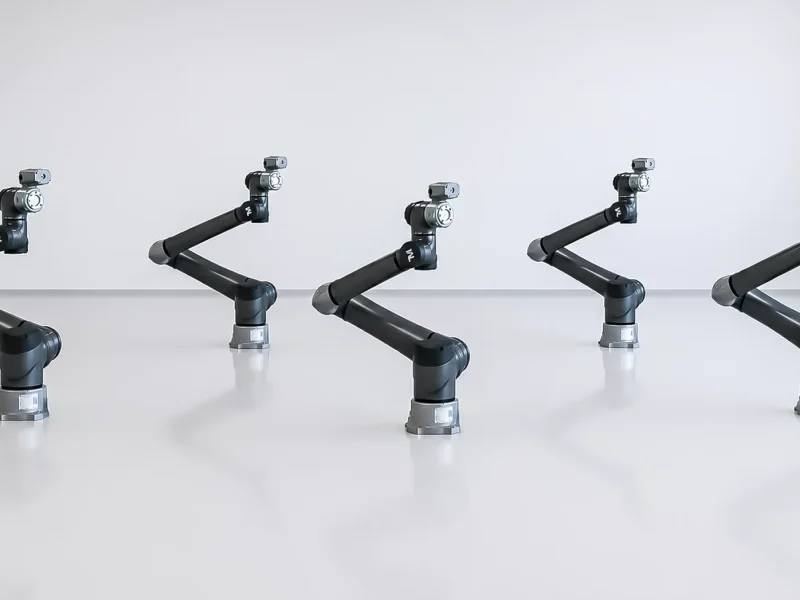
Here, we answer questions about our Techman Cobots, her Areas of Application, the Integration into existing production lines and that Training & Support Services by Gessmann.
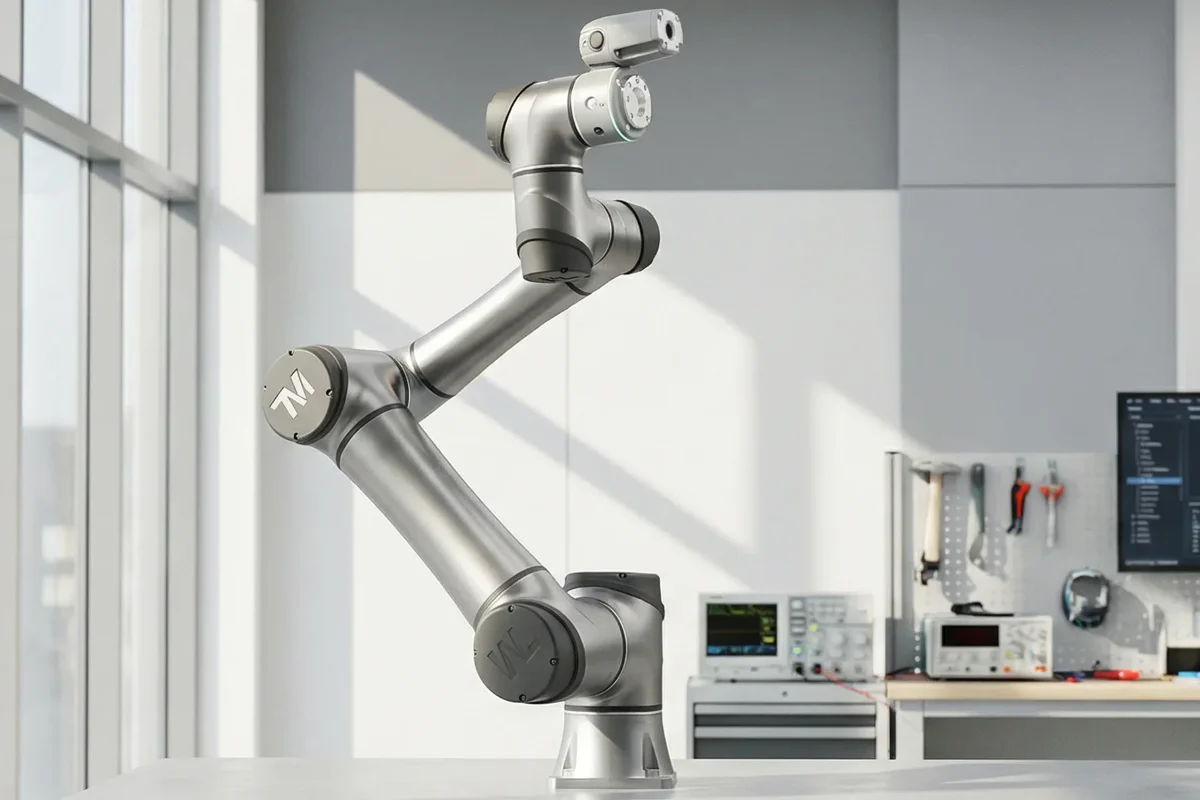
Can the system be expanded later or reprogrammed for new products?
Yes. Cobots are flexible:
New grippers, programs, or tasks can be added at any time.
The system can be expanded—for example, with additional workstations or more cobots.
Can the cobot be integrated into my existing machines and IT systems?
Yes. Cobots can be connected to:
• Machine controls
• Camera systems
• ERP/MES
• Material Handling
This results in end-to-end automation processes.
How can I safely integrate the cobot into my environment?
Through a security concept certified in accordance with ISO standards, which takes into account, among other things:
• Power and speed limits
• Social Distancing Zones
• Sensors
Possible protection zones
The risk assessment determines whether additional protective measures are necessary.
How long does it take to integrate a cobot?
Depending on the complexity:
• Simple applications: 1–2 weeks
• Complex cells: 4–8 weeks
• including custom designs; may be longer as needed
What does integrating a cobot into my production process involve?
System integration includes:
• Process analysis
• Selecting the Right Cobot Model
• Design of grippers and fixtures
• Safety Concept & CE Compliance
• IT/Interface Integration
• Commissioning & Test Run
Do you also provide maintenance support for peripheral equipment, such as grippers or cameras?
Yes, the service can also inspect, repair, or replace end effectors, vision systems, and add-on modules.
Are replacement parts available on short notice?
Yes. Key components such as motors, joint assemblies, and safety modules are generally available quickly or can be kept in stock.
How often does a cobot need to be serviced?
The cobot is maintenance-free!
Contact our team of experts
Customized solutions for your application—tailored to your needs and delivered with expertise.
Contact Request
We look forward to hearing from you!
Use our contact form, give us a call, or visit us
Meet us in person.
W. Gessmann, LLC
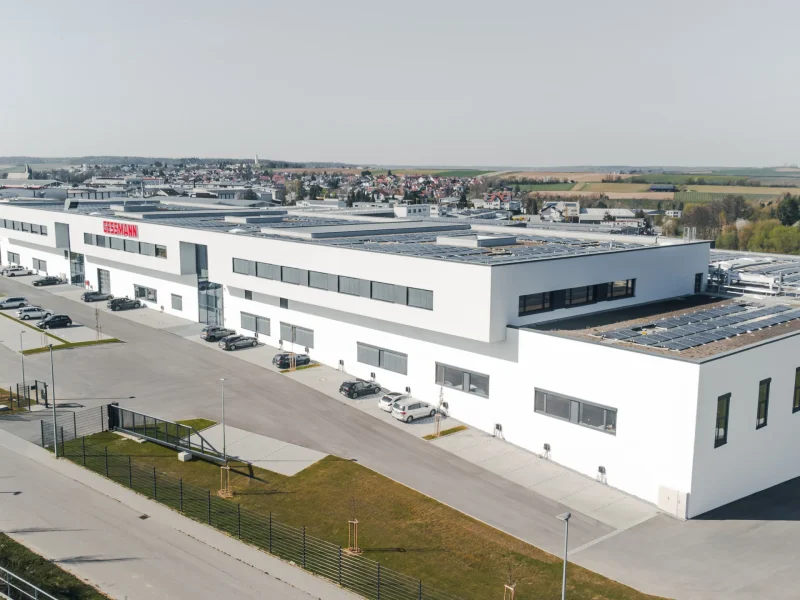
Leingarten Plant:
221 Eppinger Street
74211 Leingarten, Germany
74193 Schwaigern, Germany
You are currently viewing placeholder content from Default. To access the actual content, click the button below. Please note that doing so will result in data being shared with third-party providers.
More Information